
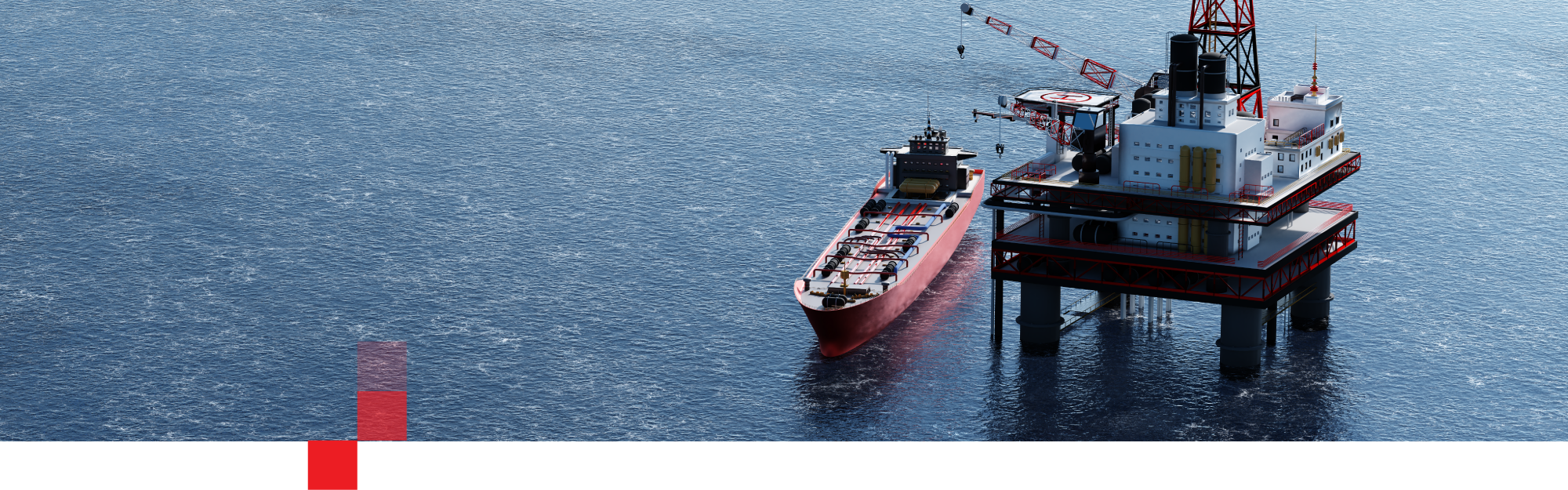
Offshore oil rigs operate in isolation, often hundreds of kilometers from shore. Every fiber link supports drilling control, safety systems, telemetry, and crew communications. When connectivity fails, response time is measured not in minutes—but in helicopter dispatches and halted production.
Robotic fiber automation changes that equation. It keeps platform communications stable, reduces hazardous exposure, and restores connections in 36–60 seconds—without sending a technician into a classified zone.
XENOptics manufactures the ruggedized robotic optical switching platforms deployed in these environments. The specifications in this article reflect published product datasheets and real operational parameters.
The cost of a single fiber failure offshore
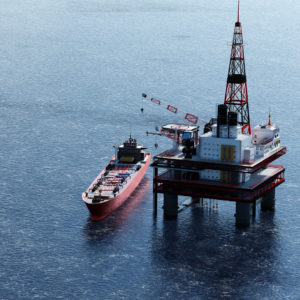 On an offshore oil rig, fiber is not just IT infrastructure. It carries drilling control and SCADA data, safety monitoring and alarm systems, CCTV and perimeter surveillance, voice and crew welfare communications, and backhaul to satellite or subsea links.
A single mispatch or damaged jumper can degrade control signals or interrupt monitoring. Manual restoration often requires certified offshore technicians, permit-to-work clearance, hazardous-area entry procedures, and potentially a helicopter or vessel transfer.
The operational cost escalates quickly. Production delays, safety exposure, and logistics multiply the impact of what would be a routine patch-panel issue onshore. According to industry benchmarks from Wood Mackenzie, unplanned offshore production downtime can cost operators $3–7 million per day depending on field output—making even brief connectivity interruptions a material financial event.
With robotic cross-connect technology, a fiber path can be reconfigured remotely in 36–60 seconds. That speed compresses mean time to repair from hours to seconds, without hazardous-area entry.
Deployments typically achieve ROI within 12–18 months, driven by reduced dispatch, lower labor exposure, and avoided downtime.
Designing for hazardous area fiber
Offshore platforms face extreme environmental stress: salt fog and corrosion, vibration and mechanical shock, temperature fluctuations, limited rack space, and classified hazardous zones governed by IECEx and ATEX directives.
A ruggedized optical switch—functioning as an explosion-proof optical switch enclosure where required—must tolerate these conditions without introducing optical penalties.
Key performance characteristics include:
- Insertion loss ≤0.8 dB (288-port systems) and ≤1.0 dB (576-port systems) in standard connectorized configuration
- Return loss >55 dB (UPC)
- Salt-fog tight connectors rated for marine environments per IEC 60068-2-52 salt mist testing
- Field-replaceable modules to reduce mean time to repair
- Compliance alignment with NEBS Level 3, ETSI 300 019 Class 3.2, and DNV-ST-0145 for offshore and subsea equipment where applicable
Connectorized architecture avoids field splicing complexity. Modules can be replaced without disrupting live traffic—critical in constrained offshore maintenance windows where permit-to-work processes can add hours to any physical intervention.
For installations in exposed cabinets or utility areas, ruggedized enclosure options support deployment in salt-laden air and vibration-prone zones without degrading optical performance over time.
Automatic protection during generator outages
 Power stability offshore is never guaranteed. Platforms rely on generator systems, and transitions between power sources introduce risk.
In conventional optical switching systems, power interruption can drop circuits. In offshore environments, that can mean loss of control telemetry or degraded safety monitoring—exactly when stable connectivity matters most.
A passive latching optical mechanism eliminates that failure mode:
- The optical path remains physically latched without continuous power.
- Power is drawn only during the 36–60-second switching event.
- Super-capacitor backup ensures switching operations complete safely even if power drops mid-transition.
- Idle power consumption remains approximately 6W, with deep sleep below 0.5W in outside plant scenarios.
If a generator fluctuation or switchover occurs, live optical circuits remain intact. Connectivity persists even during maintenance or temporary power instability. This passive latching during generator outages is not a software feature—it is a physical characteristic of the switching mechanism itself.
This architecture aligns with offshore resilience requirements defined in standards such as IEC 61892 (electrical installations in mobile and fixed offshore units): no unintended drops during environmental or electrical events.
Ruggedized fiber monitoring and remote control
Offshore operators increasingly centralize monitoring in onshore network operations centers. Fiber infrastructure must integrate cleanly into that control plane.
The robotic optical platform integrates via REST API, SNMPv2/v3, and centralized NMS environments. Third-party remote OTDR systems can be connected for continuous fiber diagnostics. While the switching platform does not perform optical diagnostics natively, it enables automated rerouting when faults are identified—closing the loop between detection and restoration without human intervention on the platform.
This approach delivers reduced helicopter dispatch for routine fiber events, faster fault isolation through centralized visibility, a full audit trail of every connect and disconnect event, and software-controlled, policy-driven fiber management across the platform’s optical infrastructure.
Every cross-connection is logged, time-stamped, and centrally visible—supporting compliance, audits, and post-incident review. For operators subject to HSE regulatory frameworks or internal safety management systems, automated logging provides the documentation trail that manual patch records cannot reliably deliver.
Manual vs. Automated Offshore Fiber: Side-by-Side
| Aspect | Manual Offshore Patching | Automated Offshore Fiber |
|---|---|---|
| Hazardous-area entry | Required for every event | Remote execution from shore |
| Restoration time | Hours (permit + dispatch) | 36–60 seconds |
| Human error risk | High | Software-controlled execution |
| Generator transitions | May drop circuits | Passive latching maintains links |
| Documentation | Manual logs | Automatic audit logging |
| Standards traceability | Operator-dependent | NEBS 3 / ETSI / IEC compliant |
A new standard for platform communications
 Offshore oil rigs demand resilience at Layer 0. Fiber connectivity underpins drilling control, safety systems, and operational continuity. Manual patching in hazardous environments adds risk, delay, and cost.
Robotic fiber automation provides rapid remote reconfiguration, reduced hazardous-area exposure, generator-safe passive latching, ruggedized performance validated for marine conditions, and measurable OPEX reduction with typical payback in 12–18 months.
When fiber becomes remotely controlled infrastructure rather than manual hardware, offshore platforms gain safer operations, faster recovery, and continuous 24/7 fiber health—without sending personnel into high-risk zones.
If your platform operations involve fiber patching in classified or hazardous areas, request an engineering review to assess where robotic switching fits your topology and safety requirements.
FAQ
Can the switching platform be installed directly in a classified hazardous zone?
The CSOS platform itself is designed for equipment rooms and utility spaces. For installations adjacent to classified zones, ruggedized and explosion-proof optical switch enclosure options are available to meet IECEx and ATEX requirements. Placement strategy should be determined during engineering review based on your platform’s zone classification drawings.
How does remote OTDR integration work?
Third-party OTDR systems connect to the switching platform’s monitoring ports. When the OTDR detects a fault, the platform can execute an automated reroute to a protection path—compressing response time from hours to under a minute without on-platform intervention.
What happens to active circuits during a generator switchover?
Nothing. The passive latching mechanism holds all established optical paths in place without power. Circuits remain intact through generator transitions, brief outages, and scheduled maintenance windows.
What connectors are supported for salt-fog environments?
The platform supports SC/APC and LC/APC interfaces with salt-fog tight connectors tested per IEC 60068-2-52. Connectorized architecture eliminates the need for field splicing in marine conditions.
How does this reduce helicopter dispatches?
Every fiber event that can be resolved remotely—activation, reroute, protection switch—is one fewer reason to mobilize personnel. Operators using robotic switching in offshore deployments routinely report measurable reductions in non-emergency platform visits tied to fiber maintenance.
What is idle power consumption?
Approximately 6W in normal standby. In outside plant or deep-sleep configurations, consumption drops below 0.5W. Power is drawn at full rate only during the 36–60-second switching event.