

Modern defense networks require secure optical switching and defense data-center automation to maintain fiber-rich connectivity at forward bases, mobile command posts, and distributed data-center nodes. These environments face contested RF, short deployment cycles, and strict security rules that traditional patch panels cannot satisfy.
Zero-trust fiber management—powered by secure optical switching—brings identity, auditability, and zero-downtime switching to the physical layer. With robotic cross-connects completing changes in 36–60 seconds and passively latched optics that keep circuits up through power loss, defense operators gain reliable, authenticated control of every fiber path at the tactical edge.
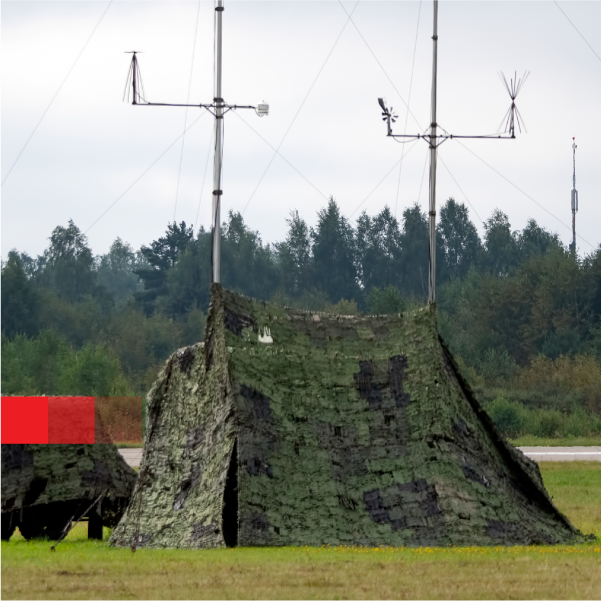
Forward-deployed networks cannot depend on doors and locks alone. Manual patching introduces uncontrolled variables: undocumented jumpers, mis-patched links, or insider access to sensitive interconnects. Shelter-based micro data centers and vehicle-mounted compute stacks add vibration, dust, and hurried maintenance to the mix.
Traditional optical distribution frames offer no way to ensure who changed what and when. For mission networks that carry ISR, C2, and coalition traffic, that is no longer acceptable.
ISR feeds, sensor fusion pipelines, satellite backhaul, and cross-domain services often need sub-minute reconfiguration. In conflict zones, dispatching a fiber technician to a shelter, antenna mast, or roof-top relay is slow, risky, or impossible.
Every manual touchpoint adds minutes of delay and significant operational risk. For units depending on real-time targeting or situational awareness, those minutes matter.
Defense networks must ride through temperature swings from −40°C to +65°C in outdoor cabinets and exposed shelters. Optical paths must stay within tight loss budgets despite shock, dust, and humidity.
Systems such as the CSOS family are engineered for these conditions, with ≤1.0 dB insertion loss and < −55 dB return loss in connectorized configurations. They enable defense data-center automation even in harsh sites, providing reliable switching and passive latching in degraded environments.
Zero trust assumes every user, device, and path is untrusted until proven otherwise. If the fiber plant remains a blind spot, that assumption breaks. Applying zero trust at Layer 0 closes that gap: every physical connection becomes an authenticated, governed, and fully logged resource, not an invisible risk hidden in a patch field.
Reconfiguring live circuits must be an authenticated act, not a screwdriver-and-ladder task. Robotic switches enforce role-based access control (RBAC) through secure management interfaces such as HTTPS and SNMPv3.
Each operator account is tied to specific privileges. Only approved roles can schedule or execute cross-connects. Every change is tied back to a named identity.
Defense missions rely on hard separation between enclaves: national, coalition, and special-access networks cannot bleed into each other. Robotic cross-connects are packet-blind. They pass only light—no frames, no MACs, no VLANs, no stored data.
If a device cannot read packets, it cannot leak them. That makes secure optical switching a strong fit for high-assurance environments where even Layer-1 visibility is too much.
All actions—connect, disconnect, reroute, rollback—are queued, executed, and logged. Timestamps, operator IDs, and task outcomes are preserved for audits.
In incident reviews, commanders and cybersecurity teams can reconstruct exactly which path carried which mission at any point in time. Undocumented “mystery jumpers” disappear from the environment.
At the core sits a robotic optical matrix:
The < −55 dB return loss specification helps protect signal integrity across long-haul tactical runs, including fibers that traverse bunkers, towers, and hardened conduits.
These characteristics deliver secure optical switching without sacrificing optical budget, even when links hop through multiple shelters.
The control plane turns mechanics into policy:
Operations teams can integrate these switches into existing defense data-center automation frameworks, using the same identity sources and SIEM tools they already trust.
Secure optical switching supports multiple tactical patterns:
When a fiber is cut or a shelter loses power, waiting for a technician is not an option. With zero-downtime switching, operators can reroute services to backup paths in under a minute, from a secure operations center.
Passive latching keeps traffic flowing while routing tables or mission software catch up. The physical layer stops being the bottleneck during emergencies.
Zero-touch operations at Layer 0 reduce technician exposure in high-threat areas. Routine moves, adds, and changes no longer require a site visit.
Automated workflows replace handwritten labels and spreadsheets. That drives down human error and shortens the time between planning a change and seeing it live—key goals for defense data-center automation.
Generators misfire. Microgrids sag. Batteries get swapped. Through all of this, passive latching ensures the physical connection remains in place.
Super-capacitor support lets in-flight switching operations finish cleanly. The result is true zero-downtime switching at the optical layer, even in unstable power conditions.
At a FOB, a robotic switch becomes the central optical controller for all mission networks. Classified enclaves, coalition partners, and ISR feeds all land on separate ports.
Operators in the rear can create, approve, and execute connectivity changes over secure channels. No one in the FOB needs to handle live fibers during operations, and every action is logged.
In a mobile command vehicle, space is tight and access is constrained. Secure optical switching lets crews re-task sensors, radios, and compute nodes from the console instead of the rack.
Profiles for different mission phases can be pre-defined and executed as a set of queued actions. That keeps the vehicle ready to move while the network adapts in seconds.
Coalition integration cells manage some of the most sensitive connections in the network. With secure optical switching, each cross-domain link is created under policy:
If a coalition scenario ends or threat posture changes, the same workflow tears down paths just as quickly. This pattern fits well with modern zero-trust expectations.

Defense organizations are already automating provisioning, monitoring, and incident response at higher layers. Extending that logic to Layer 0 is the natural next step.
By tying secure optical switching into orchestration tools, planners can treat fiber paths like any other resource. Templates and playbooks can request new paths, validate capacity, and push changes through governed workflows.
This is where defense data-center automation becomes end-to-end: from application to hypervisor to switch port to optical patch. Zero-trust policies apply consistently across every layer.
Robotic fiber platforms are built on carrier-class foundations, with environmental compliance such as NEBS Level 3 and ETSI 300019 Class 3.2 for temperature, shock, and vibration. That makes it easier for defense integrators to embed them into broader systems that undergo MIL-STD-810 testing and certification, without starting from scratch at Layer 0.
Secure optical switching delivers measurable advantages:
These capabilities establish secure optical switching as the foundation for defense data-center automation at forward operating locations and strategic hubs alike.
Defense networks now operate at a tempo and scale that manual patch panels cannot match. They must reconfigure in seconds, tolerate hostile conditions, and provide hard evidence of who changed what at every moment.
Zero-trust fiber management, built on secure optical switching and zero-downtime switching, gives commanders and network teams that control. Every port becomes a governed resource. Every change is authenticated and auditable. And every mission gains a more resilient, agile, and secure physical foundation.
In the modern battlespace, zero trust does not end at Layer 7. It starts at Layer 0.
© 2018-2026 XENOptics. All Rights Reserved. Terms of Use.