

Why Hyperscale Reliability Still Breaks at the Physical Layer
Hyperscale operators do not usually lose reliability because they ran out of fiber. They lose it because the physical layer becomes too manual, too slow to change, and too hard to trust under pressure. That is why fiber management tools for hyperscale data centers need to do more than document ports and patch paths.
They need to help teams provision, reroute, verify, and recover at operational speed. In practice, that pushes the category beyond passive records and toward robotic fiber switching, remote fiber provisioning, and software-driven physical-layer automation.
What “Fiber Tools” Should Mean in a Hyperscale Environment
In a hyperscale environment, “fiber tools” should mean a control stack, not a drawer full of accessories. The real job is to reduce human touchpoints at Layer 0 while preserving service continuity. That means combining a smart optical switch with management software that can map topology, execute connection and disconnection workflows, queue changes, and keep an audit trail of what happened.
XENOptics switching platforms enable remote, automated replacement of manual ODF and patch-panel operations, while NMS and EMS add the workflow, visibility, and control layer that makes those changes governable.
Five Capabilities That Matter Most
Remote Fiber Provisioning
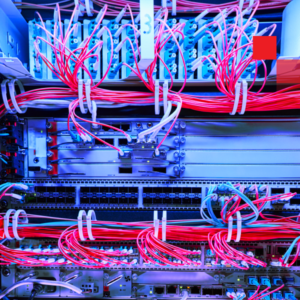 The first capability that matters is remote fiber provisioning. At hyperscale, every dispatch-heavy change process becomes a reliability problem. The longer a team waits for site access, manual tracing, and repatching, the longer a service path stays exposed. XENOptics’ CSOS and XSOS families enable remote automated optical patching and non-blocking fiber switching, which is the right direction for facilities that cannot afford to treat every fiber move as a hands-on event.
Non-Blocking Fiber Switching
This sounds technical, but the operational value is simple: reliability improves when the switching layer does not introduce new path constraints during provisioning or restoration. Both CSOS and XSOS-576D support non-blocking optical switching, which matters in environments where thousands of paths may need to be created, changed, or protected without painting the network into a corner.
Passive-Latching Optical Switching
This is one of the clearest signs that a platform was designed for reliability rather than just convenience. XSOS-576D uses an inbuilt super-capacitor UPS to complete in-progress state changes, while passive latching keeps provisioned services active. CSOS also uses passive latching to maintain traffic during power failure and field replacement. In other words, power events do not automatically translate into path loss. That is a meaningful Layer 0 resilience feature, especially in environments where uptime expectations are unforgiving.
High-Density Fiber Management
Hyperscale reliability is not just about whether a switch can move a connection. It is about whether the operating model still works when port counts explode. XSOS-576D is a 576-port non-blocking switching fabric that scales to almost 3,500 ports on a single-side 19-inch rack or almost 7,000 ports on a dual-side configuration. That kind of density changes the conversation. At that scale, manual patch discipline alone is not a reliability strategy. It has to be paired with automation, database synchronization, and path-aware software control.
Software-Led Physical-Layer Automation
Hardware matters, but hyperscale fiber management breaks down quickly without a control plane above it. NMS provides web-based management for multiple network elements through real-time visibility, topology creation, interconnection management, connection and disconnection operations, and ordered task queue execution.
EMS adds connectivity operations, scheduling, rollback, alarm and log monitoring, remote authentication controls, and interfaces that include web GUI, RESTful API, SNMP, SMTP alerts, and remote syslog. That combination matters because reliability is not only about making a path. It is about knowing what changed, who changed it, and whether the system can recover cleanly when conditions shift.
Why Robotic Fiber Switching Changes the Reliability Math
This is why robotic fiber switching changes the reliability math in hyperscale facilities. It reduces the number of manual interventions required to keep the physical layer aligned with the logical network.
It gives operators a way to treat fiber infrastructure as an active operational system rather than a static patching surface. And when it is paired with optical verification before latch, synchronized databases, queued workflows, and audit-ready logging, it becomes much easier to improve physical-layer reliability in hyperscale facilities without adding more process drag.
What to Look for in Fiber Management Tools for Hyperscale Data Centers
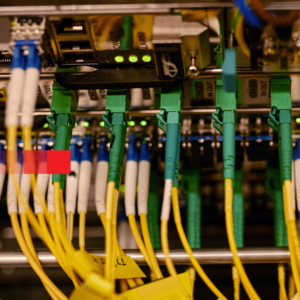 For teams evaluating the best fiber management tools for hyperscale data centers, the checklist is straightforward. Can the platform provision remotely? Is the switching architecture non-blocking? Does traffic remain protected during power loss? Can it handle high-density fiber management without collapsing into manual overhead? And does the software layer provide topology awareness, change control, and operational traceability?
If the answer to those questions is yes, the platform is doing more than managing fiber. It is actively improving reliability at Layer 0.