

Modern defense networks span bases, airfields, radar sites, command centers, and remote test ranges. All depend on fiber that must stay resilient, secure, and auditable. Yet many military environments still rely on manual optical distribution frames where every change means sending cleared staff into bunkers, shelters, or conflict zones to move jumpers.
Secure optical switching changes that model. Acting as a remotely controlled virtual patch panel at Layer 0, carrier‑class automated optical switches allow defense teams to re‑route mission traffic in 36–60 seconds while passively latched fiber paths keep services up even during a power loss.
For architects supporting joint operations centers, forward‑deployed sensor nodes, and hardened data centers, this is a shift from manual vulnerability to software‑defined resilience.
Manual patching at the physical layer creates a structural blind spot.
That brings three persistent problems:
As defense networks add AI clusters, coalition links, and hyperscale connectivity between core and edge sites, the number of fibers explodes. Static, manual patching cannot keep up.
Secure optical switching closes this gap by extending automation and auditability all the way down to the physical plant — in both simplex data center designs for one‑way guarded flows and duplex data center designs for bidirectional command‑and‑control.
| Dimension | Manual patching | Robotic fiber management (automated optical switch) |
|---|---|---|
| Reconfiguration time | 1–2+ hours including dispatch and access | 24–60 seconds per cross connect |
| Personnel risk | Requires on site presence in secure or hazardous locations | All work executed from NOC or cyber cell |
| Error rate | Prone to mis patch and labeling errors | Firmware executes pre validated queued tasks |
| Audit trail | Paper tickets or ad hoc logs | Time stamped, user attributed operations in a central log |
| Security posture | Hard to enforce least privilege at ports | Ports treated as governed endpoints under zero trust policy |
| Operational model | “Wire by wrench” | Software workflows and APIs at Layer 0 |
At the core sits a carrier‑class automated optical switch such as XENOptics XSOS and CSOS platforms. These systems function as robotic patch panels that can create any‑to‑any fiber cross‑connects without human hands at the rack.
| Platform | Ports & mode | Typical roles in defense networks | Optical performance (field) | Switching & power | Environment & standards |
|---|---|---|---|---|---|
| XSOS 288 | 144×144 simplex; 288 fibers | Core DC, labs, guarded one way domains | IL ≤0.8 dB; RL < -55 dB (UPC), <-65 dB (APC) | ≤60 s per connection; passive latching | Indoor; ETSI 300019 3.2; NEBS 3; GR 63/1089 |
| XSOS 576D | (144×2)×(144×2) duplex; 576 fibers | High density DC hubs, core bases, coalition interconnects | IL ≤1.0 dB; RL < -55 dB | ≤60 s; passively latched connections | Same as XSOS 288 standards |
| CSOS 72S LC | 36×36 simplex; 72 ports | Remote sensors, radar/SIGINT spurs, test ranges | IL <1.0 dB; RL , -55/65 dB | 36–60 s; ~6 W idle; <0.5 W sleep | OSP ready; −40°C to +65°C street cabinets |
| CSOS 144D LC | 72×72 duplex; 144 ports | Street cabinets, forward shelters, mobile nodes | Same as CSOS 72 for SM | Same as CSOS 72 | Same as CSOS 72; ETSI 300019, NEBS 3, GR 63/1089 |
These platforms share several traits that matter in defense:
For OSP and tactical nodes, CSOS units are designed for cabinets and shelters rather than only climate‑controlled rooms, matching the −40°C to +65°C envelope and vibration/dust expectations drawn from NEBS 3 and ETSI 300019 3.2.
On the management plane, XSOS/CSOS systems integrate into secure networks without any Internet dependency:
At the optical path itself, the switch is packet‑blind: it passes light only, does not parse frames, and does not store payload data, minimizing the attack surface for classified traffic.
In joint operations centers and cross‑domain gateways, XSOS platforms act as central virtual patch panels between classifications, security domains, and coalition partners. When exercises or operations change, staff shift connectivity through software rather than entering high‑security racks.
A single XSOS‑576D can manage nearly 3,500 fiber endpoints in one rack face and close to 7,000 in dual‑sided configurations, replacing large fields of manual ODFs.
CSOS units placed in OSP‑hardened enclosures near antenna farms, radars, or unmanned sites enable remote path switching when fiber is damaged or repurposed. Instead of a multi‑hour truck roll, operators re‑route links in under a minute from the NOC.
Low idle power (~6 W) and deep‑sleep draw under 0.5 W support battery‑backed shelters and generator‑constrained huts, a common pattern in tactical networks.

Aerospace and weapons test ranges rely on repeatable fiber setups between instruments, systems under test, and capture systems. Using an automated optical switch as the lab’s central matrix:
Coalition operations often need temporary, auditable connectivity between partner domains. Optical switching offers time‑bounded, logged Layer‑0 paths that can be created and torn down via software without changing higher‑layer crypto or routing designs. Four‑eyes workflows ensure no single operator can push a risky cross‑domain patch unilaterally.
Zero‑trust principles now extend down to ports and jumpers. Each fiber port becomes a micro‑perimeter: nothing is trusted because of physical location alone.
XENOptics implementations support this through:
The Network Management System (NMS) adds intelligence on top of this.
| NMS capability | What it does | Defense value |
|---|---|---|
| Virtual patch panels | Represent physical ports in a software view | Lets staff operate as if on a patch frame, but from secure NOCs |
| Shortest path routing at Layer 0 | Computes the minimal path between endpoints across multiple units | Ensures predictable, efficient physical routes between domains |
| Queued tasks and | Stages connect/disconnect tasks and executes them in sequence | Eliminates manual patch timing issues; supports four eyes approval |
| Change history and audit export | Records every action; exports events via APIs/SNMP | Supports accreditation, incident review, and mission forensics |
Together, these controls push zero‑trust concepts — authenticated identity, least privilege, continuous validation — down into Layer‑0 operations.
From a standards standpoint, XSOS and CSOS platforms meet ETSI 300019 Class 3.2 environmental requirements and NEBS 3 / GR‑63‑CORE / GR‑1089‑CORE expectations for safety and EMC, giving defense programs a familiar compliance baseline even when formal MIL‑STD testing is handled elsewhere in the stack.
Where policy requires one‑way movement — for example sensor‑to‑analysis paths or low‑to‑high transfers through guards — simplex matrices provide physical enforcement. Architects can define endpoints such that “return” paths simply do not exist in the matrix, complementing guard and diode solutions at higher layers.
Core DC interconnects, dual‑homed WAN edges, and red/black separations benefit from duplex switching. XSOS‑576D supports large duplex fabrics, enabling:
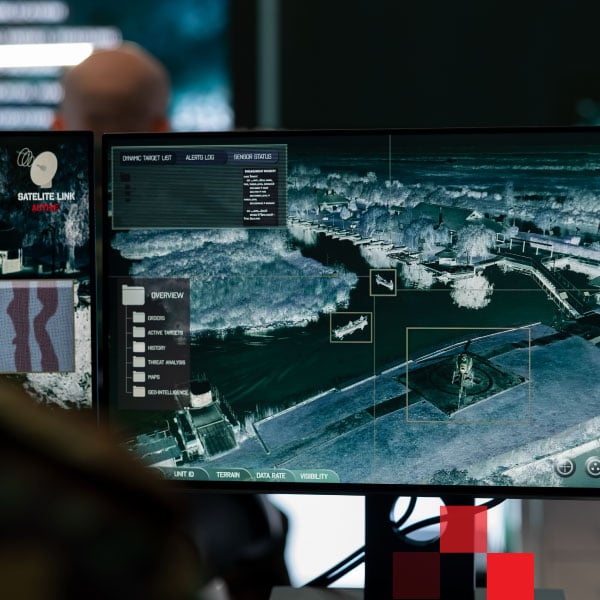
Theater‑scale networks can pair XSOS at major hubs with CSOS in field cabinets and remote shelters:
A single NMS instance spans both, giving unified topology visualization and policy enforcement across fixed and deployed assets.
The automated optical switch does not replace routers, encryptors, firewalls, or cross‑domain guards. Instead, it:
Deep packet inspection, encryption, and key management stay where they belong — in Layer‑3+ security appliances — while Layer 0 becomes programmable and auditable.
Beyond architecture, secure optical switching delivers measurable operational gains that map well to defense metrics around readiness and risk.
A typical evaluation path has three stages:
For defense programs ready to bring the physical layer under software control — eliminating manual patching as an attack and outage vector — secure optical switching is a deployable, field‑tested option.
Request a secure Layer‑0 design workshop to explore where automated optical switching fits into your defense network architecture.
© 2018-2026 XENOptics. All Rights Reserved. Terms of Use.