

Smart cities run on fiber that never sleeps. CCTV, traffic signals, public Wi-Fi, and emergency alerts all depend on links that must recover fast—without midnight cabinet visits. Manual patching can’t meet that bar.
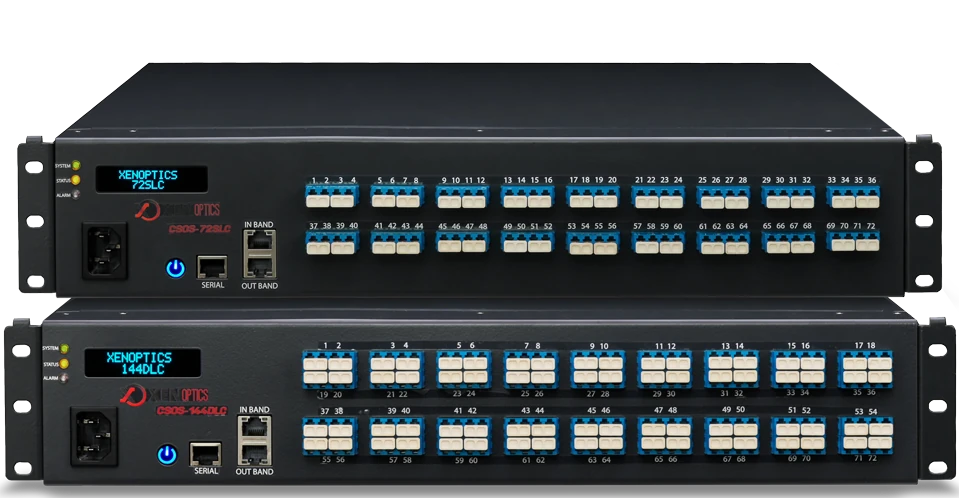
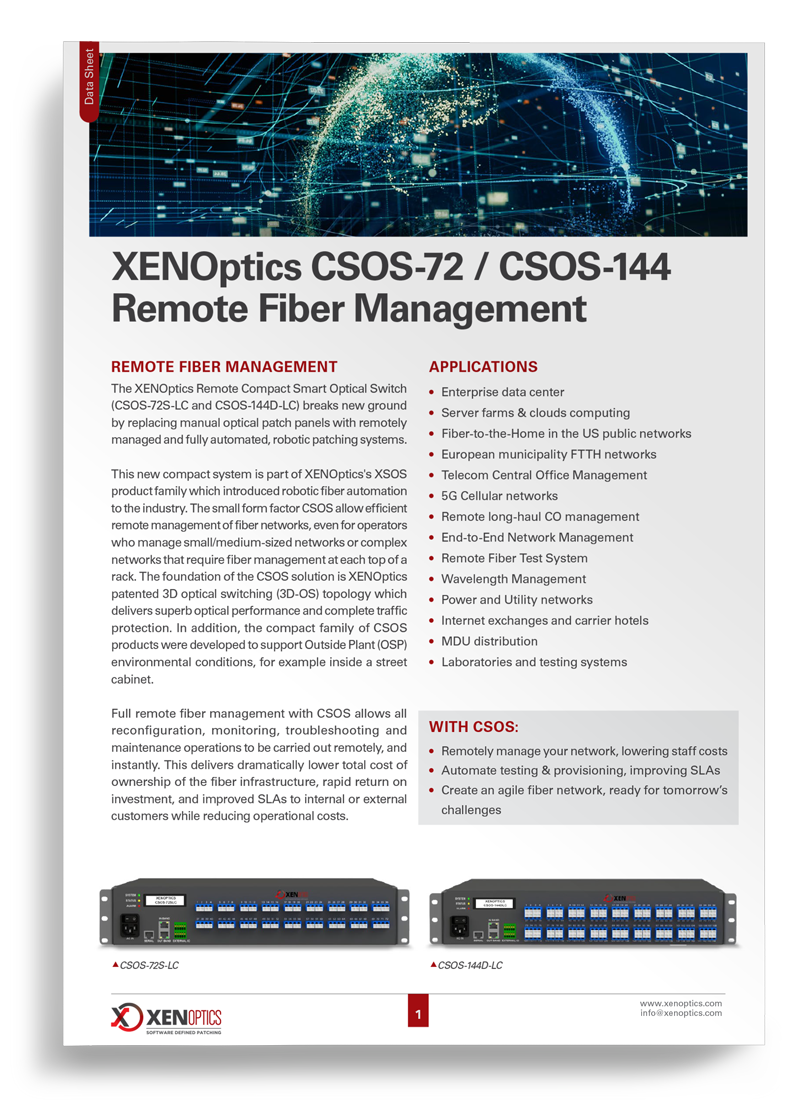
XENOptics CSOS brings sub-minute optical reroutes and passive-latched continuity to the street cabinet and the station. Cross-connects typically complete in ~24–40 seconds. Established paths remain mechanically held during cabinet power loss. Moves, adds, and changes execute from the NOC with approvals and immutable logs. Field dispatches are materially reduced.
When fiber fails, the city feels it in seconds
Demand is up. Tolerance for downtime is down. A single fiber fault can ripple from a roadside cabinet to congestion, delayed trains, and blind spots in citywide video. You can’t claim zero-trust at Layer 3 while leaving Layer 0 unmanaged. Automating the physical layer closes that gap with predictable workflows and auditable results.
Software-driven cross-connects in ~24–40 s restore services before commuters notice.
Passive latching keeps light paths up through short power events; no holding power required.
Role-based access, four-eyes approvals, and tamper-evident logs make changes accountable.
Remote execution cuts site visits and after-hours work. Energy draw is low at idle and near-zero in deep sleep.
When weather or roadworks hit, video shouldn’t go dark. With CSOS, camera backhauls stay latched even if a cabinet loses power.
As power returns, feeds resume without a physical re-patch. During events, incident commanders can request temporary path changes from the NOC to re-prioritize cameras, pop-up towers, or mobile units. The workflow is the same each time, and it leaves an audit trail for post-event review.
Traffic-signal clusters and smart intersections depend on low-latency backhaul. If a fiber segment is cut during construction, the network swings to standby aggregation in under a minute.
Signals continue to coordinate. Congestion cascades are avoided. After works finish, the system rolls back cleanly—again, by software.
Rail networks run on timing and trust. Signaling, PA, and station Wi-Fi uplinks use pre-staged workflows. Operations control centers execute changes post-close with dual approvals.
No after-hours cabinet work. No guessing who touched what. Each change is recorded with the who/what/when that operations and audit teams expect.
For festivals and stadium days, cities can spin up temporary sensors and cameras. Provisioning a cross-connect typically completes in under a minute.
Decommissioning follows the same workflow. The result is faster setup, fewer trucks, and repeatable, documented change windows.
Passive latching is a mechanical hold that maintains the last commanded optical state. It does not require holding power to keep a live circuit in place. Power is drawn only while switching, which keeps idle power around ~6 W and deep-sleep in the 0.1–0.5 W range (OSP mode). That design supports graceful behavior during short power events and simplifies UPS sizing for cabinets.
Optical paths stay put; electronics can sleep
Street cabinets are brutal: heat, cold, dust, and vibration. The CSOS OSP variant is curbside-ready.
When summer heat bakes the cabinet or a winter cold snap hits, switching must remain reliable without draining batteries, tripping breakers, or requiring fans that fail at the worst time.
Physical automation must be governed like software.
You don’t have zero-trust if your patch panel is a free-for-all
Use CSOS-72 or CSOS-144 for any-to-any switching in OSP cabinets. Dual-home the cabinet to two aggregation nodes. Enable auto-approved maintenance workflows for routine reroutes; require dual approvals for intersection-critical changes.
Use MSOS for tenant or department switching. Typical activation is ~50 s per cross-connect. The NOC schedules changes, enforces role-based access, and keeps logs for audits.

XENOptics is reshaping urban connectivity with robotic simplex and duplex carrier-class optical switches built for smart cities and transport networks.
Continue Reading →
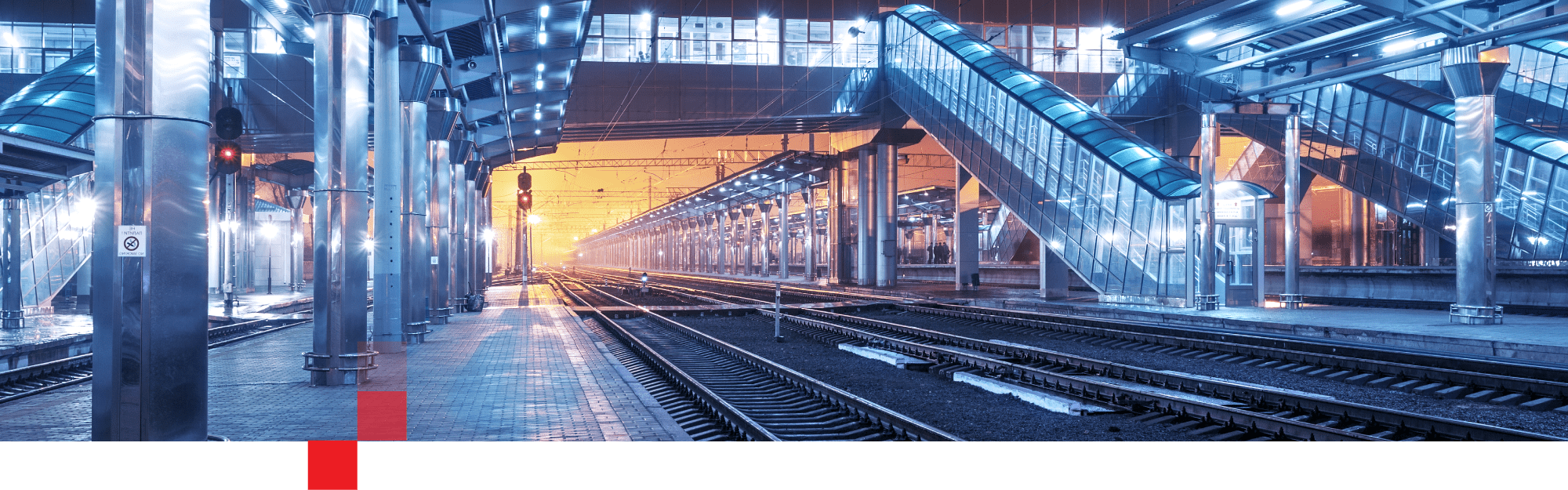
Railway fiber backbone automation is now a foundational requirement for modern rail and metro networks. Signaling, CCTV, passenger information systems, traction substations, SCADA, and emergency communications all depend on optical paths that must remain correct, auditable, and resilient under operational stress.
Continue Reading →
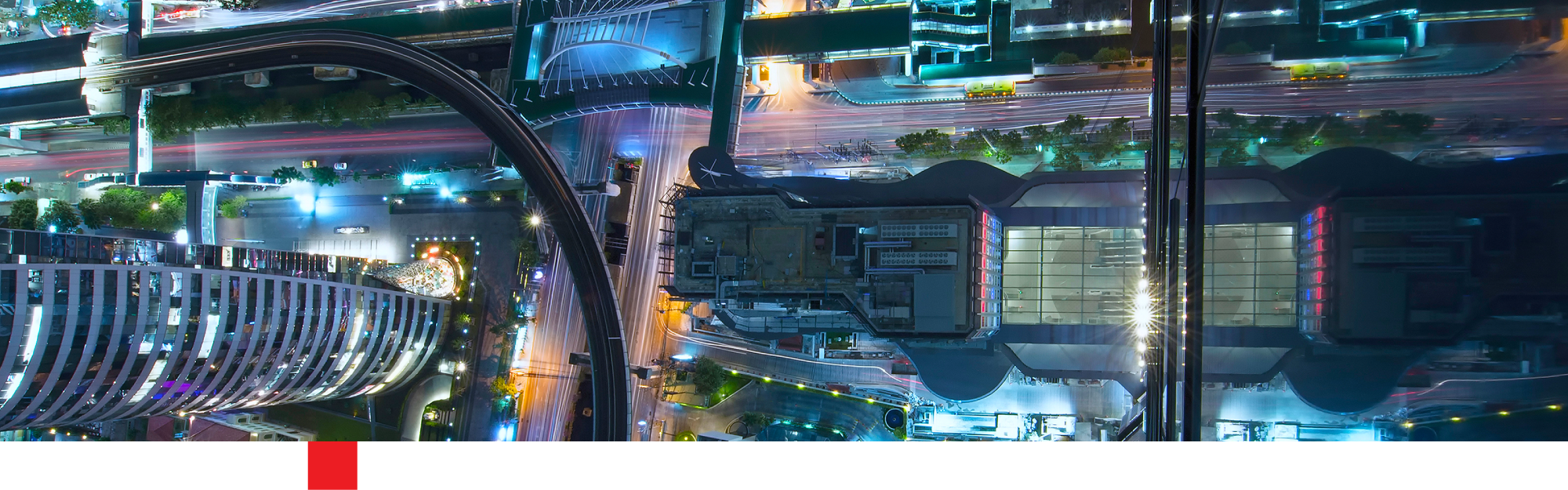
Smart city networks run real services: traffic systems, public Wi‑Fi, CCTV, and sensor backhaul. Yet many city teams still treat fiber reconfiguration as a field task, which slows response and stretches limited staff.
Continue Reading →
Pilot a corridor—ten intersections, a station zone, or a stadium precinct. Wire once. Define policy in the NMS. Execute MACs from the NOC with four-eyes approvals and immutable logs.
Book a 30-minute demo session. We’ll baseline cabinet visit rates, model OPEX impact with the ROI template, and map a reference architecture that fits your growth plan.
How fast are reroutes?
Typical cross-connects complete in ~24–40 seconds per operation, depending on topology and policy controls.
Do connections drop if cabinet power fails?
Established optical paths remain latched mechanically. When power returns, services resume without a physical re-patch.
What management interfaces are available to customers?
Web GUI, REST API, and SNMPv2/v3. CLI/Telnet/SSH are reserved for installation/maintenance and internal support.
Is there built-in remote fiber diagnostics (RFTS)?
No. There is no integrated RFTS. RFTI ports can connect external test gear when needed.
What’s the typical payback period?
Many deployments reach 12–18 months payback, driven by fewer dispatches and faster change windows. Use the ROI template to model your baseline.
Can we deploy outdoors?
Yes. The OSP-hardened variant operates from –40 °C to +65 °C with protections for dust and moisture.
© 2018-2026 XENOptics. All Rights Reserved. Terms of Use.